RSS Feed

Category Archives: Abortion

An Open Letter to Roseanne Barr, From a Feminist Sister

Dear Roseanne,

My name is Ariel Silvera, I’m a latina from Buenos Aires, Argentina who has lived around the UK and Ireland for the past 11 years. I am also a feminist trans woman. Now that the election is over, I hope you’ll have time to take a look at this letter.

I’m going to admit I’m not as familiar with your work as I should be. I never watched your famous show, although a good number of my friends of mine swear by it. I’ve occasionally seen you say some quite brilliant things in terms of politics, and my perception of you until now has been one of a rather kickass woman. So, I’m writing this out of disappointment regarding your recent comments about trans women. From a feminist to another feminist.

I want to start with a reality check. I like talking about material reality, about things that actually happen, rather than conjectures and assumptions. This reality check is about toilets. In a heated twitter outburst, you wrote ‘if she has a penis, she’s not allowed in’, continuing with ‘women do not want your penises forced in their faces or in our private bathrooms’.

Roseanne, I honestly wonder, just what do you think I do when I go to the bathroom? I’m going to tell you exactly what I do when I go to a public bathroom. Don’t worry! I won’t be sharing any scatological details or talk about any gross poo stuff. Ick! Okay, so. My public bathroom routine is, more or less, as follows:

1. Enter bathroom, head to nearest cubicle (I’m lazy, what can I say), or, if there is a queue, join it and wait for my turn.
2. Once in the cubicle, I lock the door behind me. If there is no lock, or it’s broken, I try to find a way to hold the door either with one arm, or a leg, or a bag if I have any.
3. I do my business, and I get out of the cubicle. I head towards the sinks.
4. I wash my hands carefully. At this point, maybe eye contact is made with another woman. Maybe we’ll say hi or comment on the weather. You know, small talk.
5. Leave the bathroom in the knowledge of a job well done.

So, there you have it. This is what I do when I, a trans woman, a woman who was assigned male at birth and has transitioned to female, do when I go to the bathroom. I can imagine that you, a cis woman, assigned female at birth, have a similar routine. Maybe you make witty remarks if someone strikes up a conversation, after all you’re a very intelligent person who can come up with a better topic than the goddamn weather.

What I’m trying to point out here is that at no point did I:

1. Talk to other women or girls in the bathroom about my genitals and the status thereof, or
2. Show my genitals to other women or girls in the bathroom or generally expose myself.

I imagine you don’t do this either. Congratulations. You go to the bathroom in exactly the same manner I do, as a trans woman. And before you ask? No, I have not had sexual reassignment surgery.

In your tweets, you say that people like me should not be able to access women’s bathrooms. I imagine you expect me to go into the men’s toilets. Roseanne, are you aware of the violence statistics for trans people in America alone? The fact that a majority of young trans people report verbal and physical harassment, and a third of trans youth have considered suicide? Given the violent misogyny prevalent in American society today, that if someone perceived as ‘a man dressed as a woman’, or someone simply perceived as female or feminine, entered a male-dominated space, do you honestly believe they would not face violence? Did you know that there were 17 recorded murders of trans people in America alone in 2011?

We are just going to the toilet, Roseanne. We’re not there to molest kids. You’ve brought up NAMBLA, and how you fought against their inclusion under the Gay/Lesbian banner back in the day. Good. I despise NAMBLA. I’m glad you did that work and I’m thankful for it! But, I ask, why do you bring it up? Are you implying allowing trans women into women’s restrooms is the same as opening the door to child molesters, rapists and paedophiles?

Now, I want to ask you to do something. Look up all reported cases of trans women raping minors in restrooms. Or of ‘men dressed as women’ doing this. Now, look up statistics of the violence faced by trans people in our society, and the way it maims and murders us for who we are (or, occasionally, when a black trans woman kills a white man, by accident, in self defense, she is sentenced as a mere murderer).

Ask any trans person, trans men, trans women, genderqueer & non-binary folk, and we will all tell you that bathrooms, for us, are TERRIFYING. Almost every trans person I’ve ever met (and being a long-time activist in the community, I’ve met a few from at least a dozen countries), has a horror story. That time they got beaten up for being in the ‘wrong’ toilet, whether it corresponded to their birth-assigned gender or not. The time they got shouted at. The time someone stabbed them. And this violence is mostly faced by those whom patriarchy, heteronormativity and a racist capitalism makes the most vulnerable: trans women of colour. 

You are asking us to face real violence because of the fact that a small percentage of us (just like a small percentage of ANY GROUP IN SOCIETY) may be rapists or paedophiles. There’s probably paedophiles or rapists in your own party, Roseanne, statistically speaking. By your own logic, we shouldn’t let members of the Peace and Freedom party into women’s bathrooms either.

You’ve brought the misogyny present in much of the LGBTQ movement into this conversation. I couldn’t agree more that this is a hugely important thing to address, and we need to continue to make LGBTQ groups understand that misogyny exists, that women are particularly oppressed in this patriarchal society. I think we can agree on this quite easily. I’m a long-time feminist activist, and have seen how misogyny tears movements apart, and how we must bring a feminist consciousness to bear on these problems.

Near the end of this blog post, you talk about vitriol aimed your way by members of the trans community. Threats and misogynist insults are unacceptable! But when you imply that an entire community is made up of rapists and paedophiles, many people are going to be angry and upset. And they may have very base reactions based on the fact that a massive percentage of us deal with massive self-hatred, and are made to feel alienated and suicidal by a society which, largely, promotes hatred towards us. A hatred we have to confront in the streets, every day, when we leave our front door.

Your reaction to the anger of members of a persecuted and marginalised community, which you ignorantly insulted, was this:

“The level of their misogyny is akin to racist fascism from the nazi’s in 1930′s pre war berlin-The GLBTQ community needs to confront this and challenge it.”

As a trans woman who is also jewish; as a trans woman who is also the daughter of parents who survived two military dictatorships (in Uruguay and Argentina, supported by America, might I add); as a queer feminist activist fighting for liberation, as a person who has seen her friends bleeding after being beaten up at protests, evicted from their homes, as someone who fights the good fight against oppression, just as you do… This is disgusting and offensive.

The anger and vitriol from a bunch of pissed off people with very, very little power is not comparable to the campaigns of terror perpetuated by the Nazis in the build-up to their ascension to power. And that’s just the key here: power. Do you think that trans people really have the institutional and societal power to oppress you? In the United States, trans people keep being murdered, keep surviving horrible violence and discrimination, particularly trans women of colour, as I said above. Do you really think that their communication of anger through twitter is the same as a bunch of german dudes beating up an elderly jewish shopkeeper? Is this it?  I eagerly await your compilation of tweets, which the blog post promises.

I don’t know how to end this, Roseanne. I was shocked to hear you treat trans people as if we are your enemies, as if we are part of the powers that be, which continue to keep people fighting against one another, in poverty and misery, fighting wars for profit and propagating patriarchal attitudes. I hope you read this letter, and that you consider my words in it.

I leave you with a link to a video of me giving a speech encouraging Irish LGBTQ people to become allies of the pro-choice movement, at the March For Choice, Ireland’s largest pro-choice demonstration in 20 years, only a few months ago. One of my main involvements in feminism for the past five years has been campaigning for free, safe and legal abortion in Ireland, something which I imagine you strongly support. We have a lot in common Roseanne. I hope you consider what I’ve written here today.

Regards,

Ariel Silvera

Islamophobia at Dublin’s ‘March For Choice’

Islamophobia at Dublin's 'March For Choice'

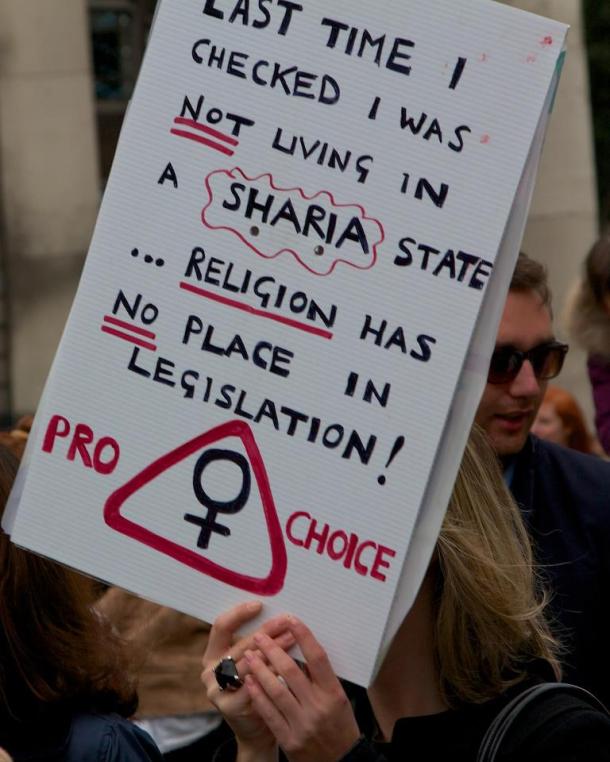
POSTER READS: ‘Last time I checked I was not living in a sharia state. Religion has no place in legislation! Pro choice”

I saw a picture of this poster in an album of Dublin’s prochoice march.

I don’t understand what the Sharia law has to do with Ireland, the main religion which is catholicism? Why couldn’t it say something about how Catholicism still dominates irish customs?

What does the Sharia law have to do with a catholic country? What’s it to do with Ireland not giving its people access to abortion and aftercare support?

Nothing at fucking all.

Just an excuse to criticize anything to do with islam and/or countries that practice islam. Just another excuse to remind people that there’s something apparently worse out there; sure shouldn’t Westerners be happy we aren’t like ‘those’ countries at least?

Fair enough if Ireland was an islam country whose laws are influenced by its religion which results in restriction to abortion, the poster would then make perfect sense. BUT the sharia law has nothing to do with Ireland so what on earth is the point of this poster exactly?

This sad belief that ‘The West’ is better and more civilized than those barbaric countries with their barbaric religions have got to stop. Dare I say that irritating phrase? ‘I can’t believe this still happens in 2012!’

Awful things happen in the west too; the West isn’t some magical land where all the good lovely stuff exists and all the terrible yucky, racist, sexist, restrictive-laws-influenced-by-religion-which-affects-women only exists in places outside the West.

Where did this idea come from that you should expect great things in a western country that doesn’t have sharia law and if a western country behaves like ‘those’ cultures with the crude religions, it’s something really REALLY bad? Get over this western imperialism, the west is no better in terms of treating it’s people with respect as anywhere else in the world.

I might as well make a sign that reads “Mitt Romney is a racist, legalize abortion now!” for all the sense it makes since some American dude in the US has nothing to do with Irish law and politics.

No one is saying there’s nothing problematic about Romney or the Sharia law but to derail a march to talk about something completely different is tacky and pathetic. I can write about some of the crude, uncivilized, tasteless, primitive things about Ireland- being a state that doesn’t have sharia law doesn’t exempt this country from the unfair ways it treats it’s citizens. Get it together.

Marching for Choice in Dublin

Posted on

Man carrying a sign with a picture of a coathanger and the words "Warning: Not for internal use".

It’s rarely easy to be openly pro-choice in Ireland. This country has no shortage of people willing to tell you how you’re a murderer, selfish, disgusting, a baby-killer. How you’re heartless. How you should be ashamed of yourself.

Woman with a poster saying "It's my uterus, I shouldn't need your permission"

The last major pro-choice demo I was at, two years ago, was a counter-demonstration to the March for Life. A couple of hundred of us, thousands of anti-choice marchers led by Youth Defence who didn’t hesitate to get in our faces, shout abuse at us, call us things I’m not going to repeat here. Being openly pro-choice can feel like running a gauntlet where you’re never sure what’ll happen next. So it’s not surprising that I was more than a little bit nervous before yesterday’s March for Choice. That nervousness, that apprehension, made what happened next even more incredible than I could have imagined.

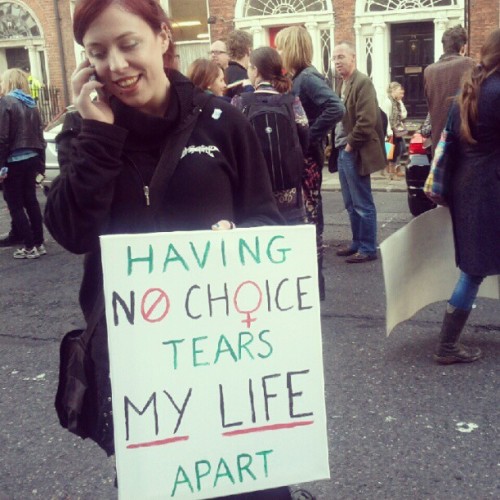
Woman on the phone, holding a sign saying "Having no choice tears MY life apart"

There were so many of us. Meeting at the Spire on Saturday afternoon, I couldn’t help but be amazed at how many people had showed up. I’d expected the usual suspects. There were, when I arrived early, hundreds and hundreds of us. And people just kept on arriving. And in these crowds of people was none of the usual tension of a pro-choice demonstration. As I walked through the crowd to check out what groups and banners were here and to say hello to friends I’d spotted, I heard so many people talking about the numbers. About how they couldn’t believe there were this many of us here. How they’d never seen so many people at something like this before. We were genuinely and collectively in awe at our numbers, here on O’Connell street. For the first time in my life, I felt that we might get somewhere with this. That we might really have some power to change things. Living in Ireland, it’s hard to truly explain what a truly big deal this is. How much of a revelation.

Woman with a sign saying "Against abortion? Don't have one!", pushing a pram with two children, with signs saying "I was a choice".

Walking through the streets, crossing O’Connell bridge, down Westmoreland Street and Kildare Street before turning up towards Merrion Square, it felt even more like a turning point. Here we were, chanting pro-choice slogans on the streets of Dublin, and the counter-demonstration was… where? I saw one man with a sign on O’Connell street. I saw no abuse from passers-by. And our numbers continued to swell.

Woman carrying sign saying "Woman, not Incubator"

In Merrion Square, the speakers were as varied and inspiring as the march itself. We weren’t on the defensive- we were on the offensive and proud of it. They spoke about how we won’t be shamed any longer. About how the majority of Irish people have consistently voted for women’s right to choose, and how we are fed up of being ignored. How if TDs want to follow God’s law and not the law of men (oh, how ironic), they should get out of Leinster house and join a seminary.

Woman carrying a sign saying "If I wanted the church in my *** I'd f*ck a priest!"

Feminist Ire’s Ariel Silvera spoke about the LGBTQ community and the pro-choice movement, arguing that we are natural allies. LGBTQ people need abortions too. Even if queer women don’t need abortions themselves, their sisters, daughters, mothers, and friends do. Ariel also highlighted the fact that it is not only women who need abortions. Many trans* men can get pregnant as well, and abortion providers and campaigners must be aware of their needs.

Man carrying a sign saying "My mother CHOSE to have me. I'm glad society didn't FORCE me on her!"

Mara Clarke from the Abortion Support Network spoke about her experiences raising funds for Irish women to access abortions they would otherwise never be able to afford. Banning abortion does not and never has prevented abortion. It just means that rich women can travel for abortions, and poor women are forced to give birth. The twelve women who travel to the UK every day for abortions are those who can afford it. The Abortion Support Network provides grants to Irish woman, and runs solely on private donations and fundraising. Needless to say, if you’re able to support them please do. Irish women should never be forced by lack of money to become mothers. Nobody should.

Woman carrying a sign saying "Fine Gael protects..." then with the words "Students, Pensioners, the Sick" crossed out, and then the word "Embryos"

But finances aren’t the only reason that people in Ireland could be forced to give birth against their will. The Irish Feminist Network‘s Osaro Azamosa reminded us that many immigrant women are simply not permitted to access visas to travel to the UK. These women’s reproductive rights are not only financially but legally denied by the current situation.

Woman holding a sign saying "Not just a white middle class issue: ethnic migrant women need access to abortion."

And so much more from Sinead Ahern, Ivana Bacik, Claire Daly- if I’ve left anyone out do tell me! And it wasn’t all about abortion. Pro-choice isn’t just about the right to choose abortion. It’s about full reproductive rights- and that means that right to reproduce free of coercion. For a real choice, women need to be supported to raise children without cutbacks to welfare. Without cutbacks to disability allowances for themselves and their children. Just as nobody should be forced to give birth because they can’t afford abortion, nobody should be forced to choose abortion because they can’t afford to raise a wanted child.

Man holding a sign saying "The Truth:In the UK, 78% of abortions are carried out under ten weeks. This is the result of an abortion at 10 weeks. Actual size. Truthfully. "

The Irish state needs to face up to its responsibility for the many thousands of women who have travelled overseas for abortions. It has a long-standing habit of brushing inconvenient women under the carpet- years ago to be incarcerated in Magdalene laundries, now on Ryanair flights to Britain. At yesterday’s march we came together to say that we are no longer going to accept this. We’re sick of being silenced and of our choices villified and shamed. We’re not going to accept being caricatured as heartless murderers anymore. We care deeply for the rights and well-being of all of us, for everyone in this country’s right to self-determination. And we’re not going to be quiet anymore.

Your post author holding a sign saying "Some of us can't leave this country! Whether illegal, trafficked, resident, refugee or asylum seeker- ALL ethnic migrant women deserve quality access to quality sexual health in Ireland. That includes ABORTION!"

Your intrepid blogstress weary and happy after the march.

On International Day to Decriminalise Abortion

This afternoon, for (I believe) the first time, the pro-choice movement in Ireland will mark the International Day for Decriminalisation of Abortion with a rally and march through Dublin city centre. It will begin at 2pm at the Spire on O’Connell Street and march to Merrion Square. I will be marching with the Choice Ireland contingent, and hope to see you Irish readers there.

I have reservations about the “Decriminalise Abortion” slogan. To decriminalise something means only the removal of criminal penalties for it; it does not mean that it becomes available, accessible or affordable. We can see this in the United States, where 40 years after Roe vs Wade decriminalised (most) abortions, access is still blocked for many women due to cost, burdensome conditions or simple lack of a provider in their area. If Ireland’s Offences Against the Person Act 1861 was repealed tomorrow, I doubt it would make much difference to the farmer’s daughter in County Leitrim, or to the asylum seeker in Waterford getting €19 a week.

That said, it would be remiss of me not to acknowledge that Decriminalisation Day was initiated by women in the Global South, not Ireland. I’m certainly not telling them how to campaign in their own part of the world. And there are tragic cases, like that of Rosa Hernandez in the Dominican Republic, where decriminalisation alone really might have made a difference. In no way do I wish to undermine the efforts of women fighting to prevent Rosa’s story repeating itself.

But abortion is a woman’s right, and we must be clear that it is a positive right to which we are entitled and not merely something that the law should not prohibit. Decriminalise it, of course. But let there be no mistaking that for our objective.

On a final note, I’d like to thank Youth Defence for their appalling recent billboard campaign, which has galvanised the Irish pro-choice movement like nothing in the past 20 years. Undoubtedly they’ll undercount our numbers this afternoon and proclaim our march much smaller than the last one they held. And it probably will be smaller than theirs. But the important thing is that ten years or even five years ago, there would have been half as many of us and twice as many of them. Those are the numbers that matter – and don’t think for a moment they don’t know it.

Rape, Pregnancy, and Abortion in Ireland.

The Rape Crisis Network Ireland has released a statement today detailing statistics concerning pregnancies resulting from rape, as well as the number of those women that chose to terminate their pregnancies. It is a timely item for discussion given the recent publication of Medical Treatment (Termination of Pregnancy in Case of Risk to Life of Pregnant Woman) Bill 2012, and the fact abortion is once again, on the minds of many. In saying that, the release of this statement in the context of this legislation demonstrates just how far behind Ireland is – this legislation, if passed, would not actually allow for abortion in cases where the pregnancy was a result of rape.

When pregnancy and rape come up in discussions, anti-choice activists tend to be fairly consistent in their willingness to withhold access to abortion for women when they have been raped, and they tend to anchor their argument in the idea that because pregnancy as a result of rape is “rare” that this somehow means that a woman who has been violated in the first instance should have her body further violated by being forced to carry to term the pregnancy of her rapist. The real meaning of that kind of rhetoric is, “Pregnancy from rape is rare; and you do not own your body anyway; therefore you will not make choices as to what happens with it.”

But even if the assertion that pregnancy from rape is rare was correct, the rarity of a pregnancy does not mean that it is a valid reason to withhold access to abortion for a rape survivor. It is bad enough that anti-choice lobbyists do not believe in the most basic self-determination of a person that would afford a woman a choice as to what happens her body normally, but it really does take a special kind of person to tell a rape victim that she should be compelled to carry a pregnancy of rape to full term against her will.

The RCNI Director Fiona Neary has said of the statistics,

“The RCNI would have concerns that any rape survivor would be subject to restrictions and would have to travel oversees to another jurisdiction in order to access a termination….. RCCs will continue to support survivors in making decisions which survivors feel are the right choices for their circumstances.”

The statistics are so disturbing they deserve to be reproduced here in their entirety;

“In 2010 1,545 survivors of sexual violence attended Rape Crisis Centres (RCCs). Of these, a small number became pregnant as a result of rape; in total 75 girls and women. These girls and women made different choices:

Ten survivors of rape chose to terminate their pregnancies (13%)

Ten survivors chose to place their child for adoption or fostering (13%)

Forty three survivors went on to parent their children (57%)

Nine survivors of rape miscarried or had stillbirths (12%)

Three survivors became pregnant more than once as a result of rape and chose different options in each pregnancy (4%)….”

What is important to note about these statistics is not only were there 75 girls and women who were made pregnant as a result of rape, this figure only represents the number of women who attended Rape Crisis Centres over the course of one year.

This of course does not reflect the total figure of women who were raped during 2010 and did not attend a Rape Crisis Centre – which is much higher, and which would logically leave the figure of pregnancy resulting from rape higher again, and in turn increase the figure of the number of women who went on to choose a termination in this scenario. These numbers may be small, but that does not mean that the experience or trauma of their rape and subsequent pregnancy is somehow lessened by that.

Naturally, for the forced-birth advocates of the anti-choice movement this trauma is utterly meaningless.

Why the X Case legislation is not the 1967 British Abortion Act


Never ones to miss an opportunity to criticise the pro-choice lobby, the Sunday Independent contained a piece by Eilis O’Hanlon yesterday where she managed to say that although it was “absurd that governments have failed to legislate” on the X Case and that she tended “towards the pro-choice end” of the spectrum of views on abortion, that there was an element of intellectual dishonesty regarding the Bill currently being tabled by Clare Daly TD  and then went on to assert that by enacting this legislation for X Case, more specifically allowing for suicide as a ground for abortion, would lead to a situation similar to England – where abortion is available in a very wide range of grounds (It is not “on demand” as O’Hanlon would have you believe – one must fall in to a qualifying risk category in order to avail of an abortion service). In the article, O’Hanlon says;

“Once they have it in law that abortions can be carried out where the mother’s life is at risk, they immediately start redefining the definition of risk until it becomes meaningless. Daly’s bill explicitly states that the risk of suicide by a mother should qualify as a reason for providing her with an abortion.

The end result, as happened in the UK, is that you would effectively have abortion on demand…” [Emphasis mine]

In fairness to O’Hanlon, she does not actually state that she is against the legislation, but she does do a very good job of trotting out the same tired old arguments against legislation for the X Case trotted out by the anti-choice lobby.

There are multiple problems, myths and lies peddled in the O’Hanlon piece but it is probably more useful to look at the one quoted above in particular, and examine Deputy Daly’s proposed legislation in detail in comparison to the law governing abortion in Britain – the Abortion Act 1967, as this is one of the main arguments being put forward by the less rational and even lesser informed of the commentariat against the Daly Bill; that is to say, if abortion is allowed in any circumstance it will allow abortion by the backdoor.

That is a factually incorrect assertion.

Before looking at the detail of the British legislation, it also may be worth noting the logical outworking of O’Hanlon’s statement here.

Either she is suggesting that a woman could be suicidal and should not be allowed a life-saving abortion in those circumstances where to continue a pregnancy would pose a risk to her life or she is implying that not only would women (under this legislative framework) would enter their doctor’s surgery and fake suicidal tendancies to get an abortion, but also that a either a Consultant Psychologist and a GP, or a Consultant Psychiatrist and a GP, or in a (fake) emergency situation, two GPs, would all happily engage in this ruse so that a woman faking suicidal feelings could have an abortion.

If this is not the implication, then the alternative is that her implication is women (under this legislative framework) would enter their doctor’s surgery and fake suicidal tendancies to get an abortion, but also that a either a Consultant Psychologist and a GP, or a Consultant Psychiatrist and a GP, or in a (fake or real ) emergency situation, two GPs, are not actually qualified to state whether she was suicidal and assess the risk to her life, and that they would err on the side of caution and provide the abortion.

This displays a lack of knowledge of not only medical practice in Ireland, but also medical culture, that renders anything else said on the issue by O’Hanlon as automatically suspect (she also repeats the myth that Ireland is the safest place in the world to go through pregnancy so it was suspect from the beginning anyway).

The Irish health system certainly has its problems, but if O’Hanlon has a genuinely held view that there are legions of GPs, Consultant Psychologists, and Consultant Psychiatrists out there all waiting in the wings to carry out abortions at the drop of a hat when they have no medical basis for doing so (because the risk to the life of the pregnant woman, in O’Hanlon’s world, is not real), and breaking the law in the process and leaving themselves open to prosecution under Sections 58 and 59 of the Offences Against the Person Act 1861 (carrying a penalty of 3 years imprisonment) – then perhaps the real story that the Sunday Independent should be covering is the major inadequacies or the mass malpractice of the medical profession, rather than O’Hanlon’s issues with the pro-choice lobby.

All of that aside, it is clear to anyone who takes the time to read both pieces of legislation in detail that the British Abortion Act 1976 and the Deputy Clare Daly’s Medical Treatment (Termination of Pregnancy in Case of Risk to Life of Pregnant Woman) Bill 2012 are very, very different pieces of legislation – the latter being constitutionally prohibited from providing qualifying circumstances for abortion beyond that where a woman would die if she continued her pregnancy.

Comparing and Contrasting the Legislation

  1. 1.    Circumstances under which medical termination is lawful

The 1967 Abortion Act establishes that abortion is legal in Britain up to the 24th week of pregnancy in a very broad range of circumstances, that is – where the continuance of pregnancy would involve risk to her (including to her physical and mental health) or risk to her existing children etc. In essence, this means that abortion may lawfully be performed where a woman would be better off, subject to the opinions of two doctors (who need not be of consultant rank), by having an abortion than continuing the pregnancy. However, if there is a substantial risk to the woman’s life or if there are foetal abnormalities, there is no time limit. It is important to note the clear distinction between a risk to the life of the pregnant woman, as opposed to a risk to her health. In order to comply with the 1967 Abortion Act, two doctors must give their consent to the procedure, stating that to continue with the pregnancy would present a risk to the physical or mental health of the woman or her existing children. This Act does not extend to the North of Ireland.

The proposed X Case legislation however, is much narrower. Were it to be enacted in its current form, it would allow for a lawful abortion to take place only where there is a real and substantial risk to the life of the pregnant woman according to either a GP and psychiatrist, or a GP and psychologist or two GPs in the absence of being able to secure the opinion of a psychologist or consultant (allowing for an emergency situation). This includes a risk of suicide. It does not allow for abortion in cases where there is a risk to her health in general, or her mental health, or where the continuance of a pregnancy involves a risk to her existing children, or where there are foetal abnormalities.

This legislation is drafted in order to solely give effect to the Supreme Court judgment in the X Case in 1992. On the basis of the X Case judgment, it does not include a time limit to prevent abortions from taking place, presumably because as to do so would be to automatically render the Bill unconstitutional i.e. the judgment held that a woman had a constitutional right to abortion in a case where there was a real and substantial risk to her life, including threat of suicide, and to introduce a time limit on this would be to undermine the Court’s decision in that – clearly a real and substantial risk may appear after any given time limit and to adhere to a time limit in that circumstance and deny her the procedure, would be to infringe upon the constitutional rights of that woman.

1967 Act

 (1)Subject to the provisions of this section, a person shall not be guilty of an offence under the law relating to abortion when a pregnancy is terminated by a registered medical practitioner if two registered medical practitioners are of the opinion, formed in good faith—

[F1(a)that the pregnancy has not exceeded its twenty-fourth week and that the continuance of the pregnancy would involve risk, greater than if the pregnancy were terminated, of injury to the physical or mental health of the pregnant woman or any existing children of her family; or

(b)that the termination is necessary to prevent grave permanent injury to the physical or mental health of the pregnant woman; or

(c)that the continuance of the pregnancy would involve risk to the life of the pregnant woman, greater than if the pregnancy were terminated; or

(d)that there is a substantial risk that if the child were born it would suffer from such physical or mental abnormalities as to be seriously handicapped.]

(2)In determining whether the continuance of a pregnancy would involve such risk of injury to health as is mentioned in paragraph (a) [F2or (b)] of subsection (1) of this section, account may be taken of the pregnant woman’s actual or reasonably foreseeable environment.

2012 Bill

4.―(1)  It shall be lawful for a medical practitioner to provide any form of medical treatment to a woman, despite its consequences for the life of the foetus, provided that―

 (a)  two medical practitioners have each formed an honestly held and reasonable belief that there is a real and substantial risk to the life of that woman, other than through suicide or another condition ordinarily diagnosed and or treated by a consultant psychiatrist or a clinical psychologist which can be averted only by the provision of that medical treatment, or

(b) there is a real and substantial risk to the life of the woman through suicide or another condition ordinarily diagnosed and or treated by a consultant psychiatrist or a clinical psychologist as determined by―

(i) one medical practitioner and one consultant psychiatrist, or

(ii) one medical practitioner and one clinical psychologist, or

(iii) , in the absence of an available consultant psychiatrist or a clinical psychologist and to prevent undue delay in the examination and or treatment of the woman, two medical practitioners,

who have formed an honestly held and reasonable belief that there is a real and substantial risk to the life of that woman which can be averted only by the provision of that medical treatment.

  1. 2.    Notification of medical terminations

Section 2 of the 1967 Act requires the Minister for Health in respect of England and Wales, and the Secretary of State in Scotland to introduce Statutory Instruments in order to, stipulate the medical practitioners who may carry out medical terminations; requires that the number of terminations be recorded; prohibits the disclosure of these recordings where they are not pursuant to the regulations; set out an offence where a person wilfully contravenes the regulations.

There is no equivalent provision in the 2012 Bill. However there is a provision that stipulates the medical practitioners who may certify whether there is a real and substantial risk to the life of a pregnant woman, including whether she is suicidal. It is presumable that statistics and data regarding the number of lawful terminations carried out, were the Bill passed, would be required either by the introduction of a Statutory Instrument, or HSE Guidelines.

  1. 3.    Conscientious objection to performing medical treatment

There are conscientious objections clauses in both pieces of legislation although they are framed somewhat differently. The 1967 Act stipulates that no person is under a duty to participate in the provision of this medical treatment where they have a conscientious objection. If this is to be tested in the courts, the burden of proof rests on the person attempting to claim it, except in the case of Scotland, where having sworn an oath to this effect will discharge the burden of proof in law. The conscientious objection does not apply where there is an immediate risk to life of the woman.

The 2012 Bill also provides a conscientious objection to participating in providing this medical treatment; however it stipulates that it must be an “honestly held and reasonable objection” to the provision of such treatment. This would initially appear to hold a slightly higher legal threshold of proving the validity of a conscientious objection, in that it must be both honestly held and reasonable in order to avail of it. However, there is no requirement on the burden of proof to be placed on the person attempting to claim it, so presumably normal proceedings under Irish law would apply – as in, the burden of proof would rest with the State in any legal proceedings and it would fall to the State to prove that a person did not have an honestly held or reasonable belief in proceedings where the conscientious objection is in question.

The conscientious objection does not apply where there is an immediate risk to life of the woman. Further to this, the individual objecting to participating in treatment must provide information to a woman about her right to such the treatment, and transfer the care of the woman to another practitioner who will perform the treatment. This may appear more onerous than the formula in the 1967 Act, however it goes on to require every health institution to have the number of required personnel in order to provide the treatment.

Therefore, it would appear unlikely that this conscientious objection provision would ever be tested in the Courts at all unless a case arose where (1) a hospital did not have the required staff on duty to perform a termination and (2) an on-duty Doctor raised a conscientious objection to participating in medical treatment where a pregnant woman presented with an real and substantial risk to her life resulting in the need for an abortion and (3) this woman actually died as a result of not receiving the required treatment resulting in (4) criminal proceedings or medical negligence proceedings being issued against the Doctor as a result of the failure to provide the emergency treatment resulting in the woman’s death and (5) the Doctor raised the conscientious objection clause to participating in the treatment as a defence in those proceedings.

Given the absence of legislation for the provision of lawful abortion where it is legal under the Constitution, this Bill if enacted would probably provide more protection for a medical practitioner who did not wish to participate in provision of such treatment; i.e. There would now be a legislative framework on the basis abortion is lawful under the Constitution in a case where there is a real and substantial risk to the life of a woman, meaning that were a pregnant woman to possess a real and substantial risk to her life and treatment were withheld due to the ethical objection of a doctor (despite the risk), leading to her death, the medical practitioner would be liable for her death due to medical negligence as there is currently no compulsion on a hospital to provide staff who will provide this service that would render the situation where the potential test of a conscientious objection clause in the courts unlikely.

1967 Act

(1)Subject to subsection (2) of this section, no person shall be under any duty, whether by contract or by any statutory or other legal requirement, to participate in any treatment authorised by this Act to which he has a conscientious objection:

Provided that in any legal proceedings the burden of proof of conscientious objection shall rest on the person claiming to rely on it.

(2)Nothing in subsection (1) of this section shall affect any duty to participate in treatment which is necessary to save the life or to prevent grave permanent injury to the physical or mental health of a pregnant woman.

(3)In any proceedings before a court in Scotland, a statement on oath by any person to the effect that he has a conscientious objection to participating in any treatment authorised by this Act shall be sufficient evidence for the purpose of discharging the burden of proof imposed upon him by subsection (1) of this section.

2012 Bill

5.―(1) No individual directly involved in the provision of medical treatment provided for in this Act shall be under a duty or be placed under a duty, whether by contract or otherwise, to participate in the provision of such medical treatment if he or she has an honestly held and reasonable objection to so doing―

(a) provided that his or her refusal to participate in the provision of such medical treatment does not cause an immediate risk to the life of the woman, and

(b) provided that, in the case of a medical practitioner who has an honestly held and reasonable objection to participation in the provision of any medical treatment provided for under this Act, such a medical practitioner shall―

(i) provide all relevant information to the woman about her right to such medical treatment,

(ii) where another medical practitioner is competent and readily available to participate in the provision of such medical treatment, refer or transfer the woman to the care of that other practitioner, or

(iii) participate in any medical treatment provided for in this Act where such medical treatment is immediately necessary to save the life of the woman and where no other competent medical practitioner is available to perform such medical treatment.

(c) Notwithstanding the provisions of this subsection, it shall be the duty of every health institution to ensure that the necessary number and category of personnel, both medical and non-medical, are made available and are not obstructed in the provision to a woman of such medical treatment as is provided for in this Act.

      (2) No institution, organisation or third party shall refuse to provide medical treatment to a woman under the terms of this section.

Supplementary Provisions of the 1967 Act and the 2012 Bill

Sections 5 and 6 of the 1967 Act are technical provisions that state that any termination performed that do not fall within the criteria of Section 1 of the 1967 Act are deemed unlawful terminations according to the provisions set out in the Offences Against the Person Act 1861. Section 3 (1) of the 2012 Bill contains a similar provision and states that any termination that does not fill the clear criteria set out in the Bill is unlawful under the provisions of the Offences Against the Person Act 1861.

Section 3 (2) of the 2012 Bill has the effect of repealing section 6 of the Regulation of Information (Services Outside State for Termination of Pregnancies) Act 1995, which prohibits persons supplying information on abortion from having any “interest, direct or indirect” in any clinic offering abortion services outside the State. Given the differing abortion law in Britain, there is no equivalent in the British legislation.

Capacity to consent to treatment by a minor

Section 6 (3) of the Bill stipulates that provided a minor who satisfies the criteria set out in the Bill for undergoing a lawful termination, may receive this treatment without the validation of her parents or guardian.

The 1967 Act does not explicitly deal with minors and consent, however in Britain, 16 and 17 year olds can consent to medical treatment without it being overruled by their parents and minors under 16 can consent to treatment provided they have the intelligence to understand what they are doing. The medical law used to assess whether a person under 16 has the capacity to consent to treatment was set out by Lord Fraser and Lord Scarman in the House of Lords in the Gillick judgment, which indicated the circumstances under which a minor may undergo treatment.[1]

The test of whether a minor can consent to medical treatment or not is often referred to as the test of “Gillick competency.”  Lord Scarman stated;

“…it is not enough that she should understand the nature of the advice which is being given: she must also have a sufficient maturity to understand what is involved.” He stated further; Parental right yields to the child’s right to make his own decisions when he reaches a sufficient understanding and intelligence to be capable of making up his own mind on the matter requiring decision.”

The implication of this judgment is that where a minor has the capacity to consent, they may do so – a sensible enough approach to the area of consent to any medical treatment by a minor.

Abortion on demand? Certainly not.

All of that aside, it is unlikely it will even make it past the first Dáil vote and enter Committee Stage, let alone be passed in its entirety – given that that this is the Government is still awaiting feedback from the Expert Group on Abortion, combined with an unwillingness to legislate for X anyway, despite long-standing commitments to do so from Labour..

 However, the Medical Treatment (Termination of Pregnancy in Case of Risk to Life of Pregnant Woman) Bill 2012 will clearly not allow for abortion in the range of circumstances as set out by the 1967 Abortion Act, and it is either foolish or wilfully misleading for the likes of Eilis O’Hanlon to try and say it will.


[1] Gillick v West Norfolk & Wisbech Area Health Authority [1985] UKHL 7 (17 October 1985).

Why can’t a woman get a life-saving abortion in Ireland?

Ireland has produced many brave and influential women whose lives have helped change Irish society, but it’s a tragic irony that one of those who’s had the biggest impact – and sparked the longest-running controversy – is someone whose name we don’t know, who was only 14 when she came to our (and the world’s) attention and who you can bet would have given anything to have never been heard from in the first place.

She’s known as Miss X, and 20 years ago she was raped and impregnated by a much older family “friend”. Ireland is still governed by 1861 (!) legislation which makes abortion a crime punishable by life imprisonment, so her parents took her to England. When they contacted Irish police to ask if the embryonic remains might be useful as evidence, the police contacted the Attorney General, who promptly sought an injunction to compel her to return to Ireland and remain for the next nine months.

This astonishingly cruel and repressive act was “justified”, according to the Attorney General, by Article 40.3.3 of the Constitution. Passed by referendum in 1983, the Article reads:

The State acknowledges the right to life of the unborn and, with due regard to the equal right to life of the mother, guarantees in its laws to respect, and, as far as practicable, by its laws to defend and vindicate that right.

Miss X, however, was threatening suicide if she was forced to bear her rapist’s child and so her lawyers argued that her own right to life – also protected by Article 40.3.3 – was engaged. In the High Court, Justice Declan Costello (who was eulogised on his death last year for his commitment to social justice) applied a crude balancing test to reach his decision: if Miss X was forced to continue the pregnancy, she might die, but if she was allowed an abortion the foetus would die. He thus granted the injunction barring her from travel.

On appeal, the Supreme Court took a different approach: a majority deemed abortion permissible under Article 40.3.3 where it is established, as a matter of probability, that there is a real and substantial risk (not necessarily an immediate or inevitable one) to the woman’s life. The risk of suicide, it held, fell within these exceptional grounds.

The government responded to the decision – and the controversy engulfing Irish society – by putting three more referenda to the people (the Irish Constitution can only be changed by referendum). One would have overturned the X decision to the extent that it deemed suicide a risk entitling a woman to an abortion. The second would clarify that Article 40.3.3 did not impinge on the freedom to travel outside the state – a necessity since a majority of the Supreme Court had also felt that the rights of the “unborn” would supersede the right to travel where there was no risk to the pregnant woman’s life. The third aimed at resolving another ongoing controversy, allowing information to be made available about legal abortion services outside the State.

The Irish people voted sensibly, around two-thirds defeating the first referendum and slightly smaller majorities passing the other two. This still left the State with one of the most restrictive abortion laws in Europe, however – and the cowardice of successive governments, in refusing to legislate for the decision, means that 20 years on we still don’t know exactly what it means in real terms. How is it to be determined whether a pregnancy poses a real and substantial risk to life? Who gets to decide? And what remedies are available to a woman denied an abortion despite believing she falls within the criteria set out in X?

There are no answers to these questions – and the consequences for some women are dire. In 2010, a woman named Michelle Harte from County Wexford, a cancer patient, was advised by her doctors at Cork University Hospital that she should have an abortion because of the threat posed by her pregnancy. However, the hospital ethics committee – which apparently did not read the X judgment very carefully – overruled this advice, deeming the risk to her life insufficiently “immediate”. The identity of those on this “ethics committee” is unclear, but it is stated to include a number of non-medical people, including some with “theology and philosophy backgrounds”. What kind of bullshit policy allows theologians to overrule doctors’ decisions about the medical risk to someone’s life?

Another woman harmed by the lack of legislation in this area is known to us as “C”. She was one of three plaintiffs who challenged Ireland’s abortion laws before the European Court of Human Rights, which found in her favour (although not in the other two’s) in December 2010. In a ruling that was entirely predictable after the 2007 Tysiac v Poland case, the ECHR held that Ms C’s Article 8 (private and family life) rights had been breached by the State’s failure to make abortion actually available in the extremely limited circumstances where it is legal. (Ms C, like Michelle Harte, was a cancer patient; she testified that she could not even get medical advice on the risks posed by her pregnancy, such was the chilling effect of the anti-abortion criminal law.)

The State is obliged to abide by the rulings of the ECHR (although there is little in the way of enforcement mechanisms) and so, as a practical matter, it has one of two options. It can either amend the Constitution to remove the “due regard to the equal right to the life of the mother” clause – thereby making abortion illegal even to save a woman’s life – or it can set out a clear and transparent mechanism, with a proper appeals procedure, for women who believe they meet the X criteria.

To readers outside Ireland, the fact that this even poses a dilemma for the government must seem indescribably bizarre – something you might expect to find in the Taliban’s Afghanistan or Khomeini’s Iran, but not in an ostensibly modern, advanced OCSE country in northwestern Europe. And in fact, it’s pretty bizarre to us too. A referendum to remove the right to a life-saving abortion hasn’t a hope of getting past an Irish public that believes by almost nine-to-one that such abortions should be legal. It’s notable that in the two referenda that have attempted to roll back the X decision – the one immediately following the judgment in 1992, and a second one a decade later – it was only the eligibility of potential suicides that was at issue; the possibility of taking the right away from women facing other risks to their lives, women like Michelle Harte and Ms C, wasn’t even contemplated. Why on earth would it be contemplated now?

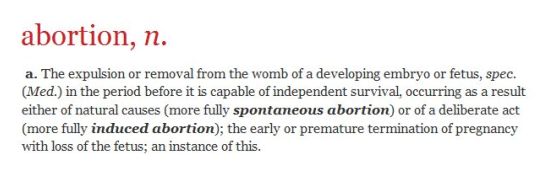
And so, as Choice Ireland noted several months before that predictable ECHR decision, the Irish anti-abortion movement have taken a different tack: they’re now picking a fight with the English language. In regular ludicrous press releases and columns like this one, they’re trying to convince a (not-buying-it) public that there is no need to protect the right to a life-saving abortion, because there is no such thing as a life-saving abortion, because – wait for it – it isn’t really an “abortion” if the purpose is to save the woman’s life. It’s a “necessary medical procedure”, or something to this effect. Which just happens to end in the death of the foetus or embryo. Got that?

Now you know, and I know, and anyone who’s ever opened a dictionary knows, that that’s a load of rubbish and there’s not a chance of the law being changed to reflect it. But what the hardcore anti-abortion movement lacks in logic and public support, they more than make up for in political power. Quite simply, the major political parties in this country are scared shitless of them – and I mean all the major political parties, not just the two right-wing ones (Fianna Fáil and Fine Gael) that have consistently pledged not to legislate for the X case. The two next-largest parties, Labour and Sinn Féin, both support the right to abortion in life-saving and a couple other scenarios, but neither trusts a woman to make up her own mind about the decision. In fact, prior to the last election (which returned five members of the United Left Alliance), there was not a single pro-choice party in the Irish parliament. And even the ULA declined to campaign on the issue during the election, although to their credit they’re starting to make up for that now.

A consequence of this hold that the foetalists have over politicians is that more than a year after the ECHR decision (and, of course, twenty after the X case) we’re still waiting for implementation. And we’ll be waiting a while more. The government “met” its obligation to tell the ECHR how it was going to implement the decision by stating that it would establish an “expert group” to consider how to implement it. Just telling that to the ECHR took six months. It took another seven to announce who was being appointed to the group and the group’s terms of reference. The group’s conclusions are to be reported back to the government in a further six months. What happens then is anyone’s guess.

There are a lot of aspects of this story that I find sickening, but perhaps none more so than this: we in Ireland are in the midst of several years of austerity budgets, which this and the last government have justified by saying they need to make “hard decisions”. So they have made the hard decision to cut income supports for working and unemployed people, lone parents and those in need of extra assistance to care for the children they have. They have the made the hard decision to impose new stealth taxes and increase VAT, all of which will have a disproportionate negative impact on those already struggling to cope. They have made the hard decision to cut funding for community and support services for low-income women and families, and to combine the Equality Authority and Human Rights Commission into a single (and even weaker) body at precisely the time when discrimination against pregnant women and new mothers is increasing. So, the Irish government has no problem making the hard decisions that hurt women and families, and the hard decisions that make it more likely that some pregnant women will seek abortions. But legislating to ensure that a woman who might die without an abortion can get one in Ireland?

It seems that’s a hard decision too far.

Please go here for information on the Action On X campaign, or email actiononx at gmail dot com

Debating Choice at TCD

Posted on

A strange and unusual thing happened last week. I popped along to check out TCD’s debate on whether “This House Believes Abortion Is A Woman’s Choice“. In all honesty, my expectations were pretty low going in- I was mainly showing up to see Feministe’s Jill Filipovic in action. From the debate, I expected the usual suspects and more of the same- accusations flying from all sides, a lack of common ground so extreme that it’s surprising that we’re all technically speaking the same language.

I was pleasantly surprised.

I am, by the way, a dyed-in-the-wool pro-choicer. I believe fervently that our bodies and our lives are our own. We should not be punished for our sexualities. We should not be forced to give up decades of our lives for the sake of someone else’s principle. While as a good skeptic I cannot deny the possibility of changing my mind, I consider that possibility remote.

Before I talk about the arguments I found useful and interesting on the part of the pro-life speakers, however, I’d like to take a moment to discuss those which were neither. These arguments were based on essentialist and demeaning ideas of gender. They’re getting a TW for transphobia and misogyny, so I’ll clearly mark when I’m done talking about them if you’d like to scroll past them.

The Bad Stuff- TW for transphobia, extreme sex-negativity, misogyny, and discussion of sexual assault.

“The ability to give birth to children is the essence of what makes a woman a woman”

According to this speaker, what makes a woman a woman is the ability to bear children. That is it. That is all. The sheer degree to which this dismisses those who cannot or do not have children- infertile women, trans women, many queer women, childless/childfree women- is difficult to exaggerate. Are these women not women? Are we really going to determine our entire identities by the presence or absence of a functioning uterus? How incredibly insulting is that to the women in the audience who are unable to have children? Who do not wish to have children? To adoptive parents, to non-birth mothers in same-sex couples, to women whose children were born through surrogates? And what about the many trans men out there who have given birth? Or the women who have given birth to the children they raise, who consider themselves to be women above and beyond their role as mothers? This statement is not only insulting to all of the above people. It is also, quite simply, wildly inaccurate. It’s just plain wrong.

“Abortion is not a woman’s choice but a thing that men make women do.. abortion leads to men treating women like objects and doing whatever they want with them”

I find it difficult to imagine how allowing women a choice makes other people do “whatever they want with them” in a way that taking her choice away does not.

Listen. I wish we lived in a world free of sexual coercion. I really do. If banning abortion led to a world where women were not objectified, where we were not sexually assaulted and abused? In that world, us pro-choicers would have a lot of explaining to do. However, we don’t live in that world. Women are objectified. Women are overwhelmingly more likely than men to be the victims of sexual coercion and abuse. These things happen whether or not abortion is legal. Legal abortion, however, gives women one small area of choice within this. It lets us have one small space of sovereignty over our own bodies.

“Abortion disenfranchises half of the people in the pregnancy”

In case you’re unsure, this person was talking about men, not fetuses. Women having abortions without their partners’ agreement hurts men’s feelings, you see. There are two people in every pregnancy, and those are the two people who brought the pregnancy about.

I’m sorry, but no. Yes, there are generally two people involved in bringing about a pregnancy- assuming that nobody is being sexually assaulted or raped at the time. Which happens. But even in a situation where a person gets pregnant through a consensual act, there are not two people in that pregnancy.

Men’s feelings have the potential to be hurt- deeply- if a woman aborts a fetus who could have become their child without their agreement. This is absolutely true. Emotional hurt is no small thing. However, women’s feelings as well as our bodies and our rights to bodily integrity all will be hurt, permanently altered and disenfranchised if we are forced to carry to term and to give birth without our consent.

“If a woman did not use contraception or early abortion, she should not have the right to later abortions”

In an ideal world, this might be an argument. In a world where there was no stigma around pregnancy, where everyone had access to clear and comprehensive education around bodies, sexuality, consent and contraception. In a world where people’s circumstances never changed dramatically and unexpectedly. In a world where nobody learned well into a pregnancy that their fetus’s life was inevitably going to be agonising and short. In a world where nobody developed medical conditions in pregnancy which threatened their own life, health, or well-being. In a world where nobody was in an abusive relationship, family or living situation which threatened their ability to exercise their own free choices.

In that world, maybe this would be reasonable. But we don’t live in that world.

Now for something a little more interesting

Fortunately for those of us at the debate, the tired old arguments above were not the only things the pro-life side of the debate had to say. One argument in particular impressed me. Here’s the gist:

Legal abortion creates a false sense of choice for women. Our choices are not only to give birth or not to do so- these choices do not and can not exist in a vacuum. Where we have a situation where women do not have access to all the supports they need to be mothers as well as engaging fully in other areas of their lives, where women are forced for economic reasons to not be mothers, their choices cannot be free. Legal abortion, by giving women an easy ‘out’ from motherhood, also gives employers, other institutions, and the state an easy ‘out’ from providing for the needs of women who are mothers as it allows them to deem women to have a made a free choice to not participate fully in these.

That there?

That is a frackin’ point. Women are often forced to choose between careers and motherhood. Women who are mothers are excluded from many areas of life by the assumption that they will take on the majority of caring responsibilities. Women are forced not to be mothers by their economic situations. Women’s lives are stunted by this lack of support for mothers- for parents! This is a major, major issue.

Of course, none of this means that using women as pawns to force the hand of wider institutions in providing for the needs of parents is a reason to remove legal abortion from women. But when we speak of reproductive choice, it is incredibly important to do so with an awareness of all of the factors- social and economic as well as legal- that get in the way of women’s choice. The reproductive rights movement, and those of us who are pro-choice, need to be sure that we’re fighting for women’s rights to choose freely, to be supported in the choices we make, and to not face marginalisation or crushing poverty for those choices. And- let’s face it- the lack of legal abortion as an option in Ireland hasn’t resulted in employers falling over themselves to offer better maternity and paternity benefits and leave.

From the pro-choice side

I’m not going to spend as much time on these arguments as the pro-life side- mainly because all I could add to the conversation would be thumbs up and enthusiastic nods of agreement. But here’s a taste of what people had to say:

“If you really love a woman, how could you want to subjugate her body for nine months? If we tried to control the bodies of men for nine months, we would see violence in the street”

“For every woman who wants to work when she’s pregnant, there’s another who simply doesn’t want a kid”

“Why should women have to pay for the violation of their own bodies, with their own bodies? Even if you have sex and end up pregnant, you should be able to walk away with your body intact and not be labeled a slut and a whore. Gender equality is impossible in any real sense if women live under constant threat of having their bodies taken from them.”

“Its time to remove the idea that women deserve to be punished for having sex. This debate does NOT happen in the abstract, and the women most affected by this are those whose bodies have never been given the real credit of belonging to themselves”

One more thing..

This was from the closing speech of the speaker who made the economic argument against abortion above. Again, I may not agree with her about abortion, but lady has a point.

“How can we come together on our shared goals and stop driving ourselves into corners? …What about violence against women, pregnancy at work, listening to women who had abortions and adoptive birth mothers?”

Yep. That. Let’s do that.

Abortion laws and maternal mortality rates – deconstructing the anti-choice spin

(This is an edited and condensed version of a piece I originally wrote for the Choice Ireland website in early 2010. I thought it was worth dusting off in view of the hysterical response by the anti-choice movement to today’s Universal Periodic Review examination, in which Ireland’s abortion policies were sharply criticised by a number of UN member states. The anti-choice criticism has been almost entirely focused on the issue of maternal mortality rates.)

Listening to the Irish anti-abortion movement, you’ll notice certain mantras that slip into every public comment. All those recent surveys indicating a shift in attitudes toward abortion? They’re meaningless, you’ll hear, because they don’t distinguish between “medical interventions” necessary to save a woman’s life and, you know, real abortions. Their own polls, of course, also ignore some important distinctions, but it is rare to hear them challenged on this – frustratingly so, since it would be so easy to do.

The latest mantra that seems to pop up whenever they speak has to do with Ireland’s maternal mortality rate (MMR). It’s the lowest in the world, apparently, and they consider this crucially significant in the abortion debate. The first few times I heard them mention it, I dismissed it as being too obviously irrelevant to merit further discussion – after all, who ever suggested that our abortion ban was killing women? Pro-choicers have always pointed to the numbers of women travelling to Britain or further afield (statistics, incidentally, which the anti-choice movement prefers to ignore) as demonstrating our hypocrisy in using another country’s laws as our safety net so that Irish women don’t die from illegal abortions. We have never claimed that they are somehow dying anyway. So what exactly is their point?

As their use of this statistic increased, two themes began to emerge. The first was the claim that our low MMR was somehow indicative of a “culture of life” or “how Ireland values life”. This is, of course, utter nonsense, as is shown by our mortality figures in other categories. For example, we have a relatively high (for Europe) perinatal mortality rate;[1] the cervical cancer death rate has steadily increased here while declining elsewhere in Europe;[2] and our youth suicide rate is fifth highest in the EU.[3]Surely the fact that we don’t even have universal primary healthcare, unlike nearly every other developed country in the world, puts the final nail in the “culture of life” coffin.

The second theme took a little longer to deconstruct but ultimately turned out to be just as flawed. In this one, the anti-choicers try to use international statistics to show a correlation between legalised abortion and high MMRs, or inversely between abortion bans and low maternal mortality. In other words, they argue that the Irish statistic isn’t a fluke but part of a pattern of greater survival rates for pregnant women in countries that outlaw abortion. A typical example is an article titled “UN Health Data Show Liberal Abortion Laws Lead to Greater Maternal Death”[4], which compares the MMR in Mauritius to those in Ethiopia and South Africa; Chile to Guyana; and Sri Lanka to Nepal; and finds that in all these cases, the World Health Organisation death rate for pregnant women in the former (abortion-restrictive) country is far lower than in the latter (more liberal) country. Is there any truth in this?

The answer, unsurprisingly, is yes and no. The anti-choicers aren’t making these figures up – but they aren’t giving the full story behind them, either. For one thing, they’re assuming that “legal” equates to “widely accessible”, which is something we know isn’t always true. The United States, for example, has among the most liberal abortion laws in the world and yet there is no abortion provider in 87% of its counties[5] – not an insignificant obstacle in a large, sprawling country with poor public transport infrastructure, and where workers lack statutory rights to paid medical or personal leave. It certainly does not follow that less-developed countries have only to remove legislative barriers to abortion and suddenly any woman who wants a (legal) one can get it.

But we don’t need to rest on generalisations; let’s look at some of those countries where legal abortion is assumed to be widely available. Though Nepal relaxed its laws in 2002, it was only last summer that poor Nepalese women – thanks to a lawsuit by the Center for Reproductive Rights and the Forum for Women, Law and Development – obtained the right to state-funded abortions. And, in a country that ranks 144th out of 182 in the UN’s Human Development Index[6] – the fourth-lowest in all of Asia – there are a lot of really poor women. How exactly do the anti-choicers think these women were accessing legal abortions? Of course, there is also the matter of Nepal’s decade-long armed conflict, which led to the destruction of much of what that country had in the way of infrastructure – including healthcare facilities and how to get to them. The strong likelihood is that the change in abortion laws has had little impact for a large proportion of Nepalese women.

The situation is only somewhat better in South Africa. In 2004, the Durban Mercury newspaper reported[7] that healthcare workers were invoking moral grounds to refuse women abortions in spite of their legal rights – with the predictable consequence of dangerous backstreet abortions. A 2006 report[8] found that one-third of sexually active women attending public health clinics in one province did not even know that abortion was legal. A 2005 study[9]of forty-six women who had illegal abortions in another province found that 54% were unaware of their rights, while an additional 15% knew the law but didn’t know where to find a provider. Clearly, there are still a lot of backstreet abortions going on. The legal right to abortion is not yet an effective right – and thus it is simply disingenuous to claim that pregnant South African women are dying at a higher rate because abortion is legal.

Now if South Africa – one of that continent’s wealthier nations – can’t guarantee its women access to legal abortions, how could anyone imagine that a country like Ethiopia can? It is, after all, one of the most underdeveloped countries in the world, a place where women and children still have to walk many miles a day just to fetch water. It almost seems pointless to go looking for references on the actual availability of abortion since the law was relaxed in 2006. Fortunately, I don’t have to, because in this case the anti-choicers’ argument falls at the first hurdle: the WHO report they cite, although published last year, cites data from 2005. I’ll graciously assume they simply didn’t notice this.

I’m less inclined to be generous about their selectivity with the WHO statistics. As eager as they are to highlight those parts of the world where the MMR seems to back up their position, they’re curiously silent about those parts of the world where it doesn’t. They don’t tell you, for example, that the lowest rate in North America is in Canada, which abolished all abortion restrictions in 1988; or that in East Asia, the safest country for pregnant women is liberal Japan. And of course, while they point out that South Africa has a higher MMR than Mauritius, they conveniently ignore that both places are left for dust by countries like Niger and DRC, where abortion is pretty much totally illegal.

The anti-choicers could have a valid argument if they were using these facts and figures to show that the link between illegal abortion and maternal mortality is more complex than it may initially seem. That would be fair enough. But this is something the pro-choice side has always recognised. Even the Guttmacher Institute[10] implicates unsafe abortion in only 13% of the world’s annual maternal deaths – which means that 87% of them are caused by something else. (In real terms, of course, 13% is still a significant number, representing approximately 70,000 women per year, and a more telling statistic would be the proportion of these particular maternal deaths that occur in countries without an effective legal right to abortion. The anti-choice movement, however, doesn’t seem very interested in that. I wonder why.)

When it suits them, of course, they’re happy to acknowledge that maternal mortality is a function of a number of elements. Take the example of Chile. Family and Life recently cited a study that, in their words,[11] shows that “maternal mortality in Chile declined over the last century whether abortion was legal or illegal” [emphasis added]. In other words, factors particular to Chile other than the legal status of abortion had the most significant impact on the MMR – which is exactly the argument the pro-choice side would make. Apparently, Family and Life didn’t get the memo that they were supposed to credit the abortion ban for the decline. Neither did the Pro-Life Campaign, judging by its 23rd April 2010 newsletter: it approvingly cites a recent Lancet article[12] which attributes the worldwide decline in maternal mortality to a number of different factors, none of them relating to either the legalisation or criminalisation of abortion. Remember that the next time you hear it claimed that Ireland’s low rate is because of our restrictive laws.

But if Chile is a country whose historical MMR shows no discernible link to the status of abortion, there are plenty of others where the opposite is true – and some of the anti-choicers’ favourite examples feature prominently on that list. In South Africa, for example, a 2005 study[13] found that the MMR declined by anywhere from 51.3 to 94.8 per cent after abortion was legalised (the large range is due to the difficulty in ascertaining the number of abortion-related deaths in the pre-legalisation era). In Nepal, which legalised abortion in 2002, by 2006 the MMR had fallen by almost 48%.[14] There’s not much information available on Guyana, but one telling record is that hospital admissions for septic and incomplete abortion fell 41 percent after legalisation.[15] These statistics are not incontrovertible proof of a link between MMR and the law (especially given the already-discussed gap between what the law says and what’s actually available), but they’re a lot more persuasive than crude cross-country comparisons – and they certainly put the lie to any suggestion that legalisation increases maternal mortality.

So to summarise, the anti-choice movement is correct to point out that countries with legal abortion don’t necessarily have lower maternal mortality than countries without it, or the other way around. But they’re absolutely wrong in suggesting the existence of a pattern in their favour. If anything, the opposite is true – a big-picture evaluation of the data reinforces the pro-choice side, in that the majority of countries with high MMRs impose strict limits on abortion while the majority of countries with low MMRs do not. In picking out the exceptions and highlighting them as if they were actually the rule, the anti-choicers are a bit like the climate change deniers (not surprising, since they tend to spring from the same gene pool) who think the miserable summers we’ve had in Ireland for the past couple years prove that there isn’t a global warming trend. And they’re equally wrong.

But there’s something really offensive at the heart of this anti-choice argument, and it doesn’t actually depend on whether or not they’re right about the link between maternal mortality and the law. Even if they were, they would still be showing up their hypocrisy in pretending that their opposition to abortion rights was somehow motivated by concern for women’s well-being. These, after all, are the same people who believe that nothing short of the woman’s death (if that) should be sufficient to entitle her to an abortion. The same people who see nothing wrong with bogus crisis pregnancy agencies inflicting huge psychological damage on women in order to prevent them making that choice. We’re seeing this kind of hypocrisy being played out in the United States at the moment, where their latest tactic is to target the black abortion rate with cries of “genocide”. It wasn’t so long ago that many of the same people (i.e., white conservatives) were accusing black women of having too many babies (for the welfare cheque, of course) – and not so long before that that they were forcibly sterilising black women. They may feign concern for the women now, but it’s nothing more than a propaganda tool.

Just to emphasise the point, I did a trawl through the Family and Life and Irish Times archives, to try to find some comment from them about those 70,000 deaths per annum. Some reference to the fact that, rates and rankings aside, women are dying as a direct result of unsafe illegal abortions (and no doubt, many others die of complications from unwanted pregnancies that they would have aborted given the option). Some explanation as to how they propose to address this particular tragic consequence of the abortion laws in those countries, the laws that they support and want to see brought in everywhere else. I found nothing – which shows pretty conclusively that the life of a pregnant women isn’t really their concern. The woman in the abortion scenario has value to them only when they think they can advance their agenda by portraying it as being in her interest. And this is something the pro-choice side needs to point out in our own public statements, because at the end of the day, whatever about opinion polls and statistics, this is what distinguishes us from them: we care about women’s lives, and they don’t.

Let that be our mantra.

1. ESRI, Perinatal Statistics Report 2007, published September 2009
2. Comber H, Gavin A , “Recent trends in Cervical Cancer Mortality in Britain and Ireland: the Case for Population-Based Cervical Cancer Screening”;. British Journal of Cancer (2004) 91 (11):1902-4
3. National Office for Suicide Prevention Annual Report 2008.
4. http://www.lifesitenews.com/ldn/2009/aug/09081310.html
5. Henshaw SK, Finer LB. “The accessibility of abortion services in the United States, 2001”. Perspectives on Sexual and Reproductive Health. Jan-Feb 2003;35(1):16-24.
6. United Nations Human Development Report 2009
7. Akhona Cira and Latoya Newman, “Backstreet abortions take their toll”, 9th September 2004
8. Chelsea Morroni, Landon Myer and Kemilembe Tibazarwa, “Knowledge of the abortion legislation among South African women: a cross-sectional study”; Reproductive Health 2006, 3:7
9. Jewkes RK, Gumede T, Westaway MS, Dickson K, Brown H, Rees H: “Why are women still aborting outside designated facilities in Metropolitan South Africa?”, International Journal of Obstetrics and Gynaecology 2005, 112:1236-1242.
10. Singh S et al., Abortion Worldwide: A Decade of Uneven Process, New York: Guttmacher Institute, 2009.
11. “Chilean Maternal Mortality Study Refutes Pro-Abortion Assertions”, 1st March 10
12. “Maternal mortality for 181 countries, 1980-2008: a systematic analysis of progress towards Millennium Development Goal 5”, 12 April 2010
13. Jewkes R, Rees H: “Dramatic decline in abortion related mortality due to the Choice on Termination of Pregnancy Act”, South Africa Medical Journal 2005, 95(4):250
14. Nepal: Maternal Mortality and Morbidity Study 2008/09, Nepal Department of Health
15. Nunes F, Delph Y. “Making abortion law reform work: steps and slips in Guyana”, Reproductive Health Matters 9 (1997), pp. 66–76